
Thinking About Oxidative Stress (Part 1)
I was talking to one of my colleagues the other day and I asked him about his summer vacation. He looked at me with a scrunched-up face and then asked, “Have you ever spent an extended period of time with your in-laws?” Yikes!
That got me thinking about stress again (you might remember I ruminated on heat stress a few months ago). Stress comes in many other forms besides heat. There are cold snaps (I know all about that from living in upstate New York), transition stress (I hear having a baby is no picnic) and then there’s the usual stressors of overcrowding, weaning, transportation, lack of appetite, and feed restrictions. So many reasons to stress, but at least those beautiful gals don’t have to deal with in-laws.
Thinking about stress reminded me of Ángel Abuelo’s work. He recently received the 2024 ADSA Foundation Scholar Award for his work which focuses on enhancing immunity for both transition cows and calves.
Oxidative stress and redox status in dairy cows
Dr. Abuelo recently published, Shakin‘ Off the Rust – Oxidative Stress and Redox Status as Underlying Factors of Immune Dysfunction in Periparturient Cows and Preweaning Calves. (Abuelo, 2025). In this paper he reframes oxidative stress (OS) not merely as a biochemical imbalance but as a central driver of immune dysfunction in dairy cattle during the periparturient period and the preweaning phase. In other words, oxidative stress isn’t a side note but the main event.
Abuelo differentiates between normal shifts in the redox balance and the bigger disruptions that can cause oxidative damage – meaning the potential damage to essential cell components like nucleic acids, proteins, and fats. To measure this kind of oxidative stress, we need reliable biomarkers that show when molecules are being damaged, and the redox system is out of balance.
Biomarkers of oxidative stress
Abuelo’s research highlights several markers that are widely used in both veterinary and biomedical fields.
- Malondialdehyde (MDA): High levels signal that cells are under attack, and their membranes are breaking down.
- Oxidized nucleosides: Indicate DNA damage caused by reactive oxygen species.
- 8-Hydroxy-2′-deoxyguanosine (8-OHdG): Elevated levels are often seen in immunocompromised or stressed animals, showing genotoxic stress and poor DNA repair – a red flag that DNA is being damaged and not fully fixed.
- Antioxidant enzyme activity: Disruptions in superoxide dismutase (SOD), glutathione peroxidase (GPx), and catalase point to redox imbalance, meaning the body’s natural defenses against oxidative stress are out of sync.
Keeping OS in check
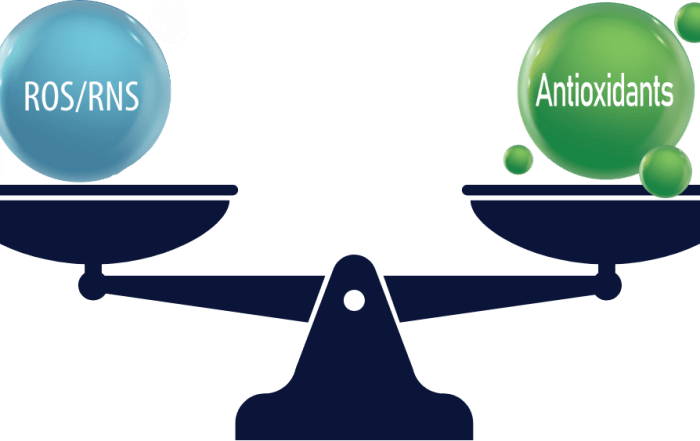
Redox balance, also called oxidant status, refers to the ongoing balance between how much reactive oxygen and nitrogen species (ROS and RNS) are produced, mainly by mitochondria and immune cells, and how well antioxidants, both from the body and the diet, can keep them in check. This balance is important for:
- maintaining cellular integrity
- modulating immune responses
- protecting biomolecules from oxidative damage
When this balance tips too far, the result is oxidative stress which is an overload of ROS/RNS that the body can’t fully neutralize. Two key antioxidant enzymes often measured as part of the balance are SOD (superoxide dismutase) and GSH-Px (glutathione peroxidase).
Oxidative stress plays a direct role in weakening the immune system of both transition cows and calves. In transition cows, it leads to neutrophil dysfunction, impaired macrophage activity, and dysregulated inflammatory signaling. In calves, OS skews T-helper cell differentiation toward Th2-biased responses, weakens immune memory and reduces how well vaccines work. This makes calves and cows prone to metabolic and infectious problems like mastitis, metritis, diarrhea, and respiratory disease.
Abuelo argues that OS not only develops because of health challenges, but it also worsens them once it’s in play. He suggests a clearer way to measure redox status and recommends more targeted antioxidant strategies instead of relying on simply what has always been done.
Stay tuned for Part 2
Whew! Dr. Abuelo’s paper is fascinating and contains a LOT of information. Turns out oxidative stress is a lot like the in-laws – it shows up when you least want it and makes everything harder.
There’s quite a bit more to say on this, so next month I’ll take you through Abuelo’s proposed ideas about measuring redox status and supplementation strategies. Stay tuned!
Author: Rick Brown is Chemlock Nutrition’s Dairy Science Director with a BS in Animal Science from Cornell University.